1. A Journey Begins: Touching Down in Oakland
It was late afternoon when my flight descended over the bay. The first thing I noticed from my window seat was how golden the California light looked, spilling across the San Francisco skyline in the distance before warming the waters near the Port of Oakland. Oakland always promised something different. A bit of edge, a touch of soul, and unmistakably, a creative pulse. This trip, I wanted to explore it through a different lens—one that focused on the city’s evolving design culture and how it has influenced its hospitality scene.
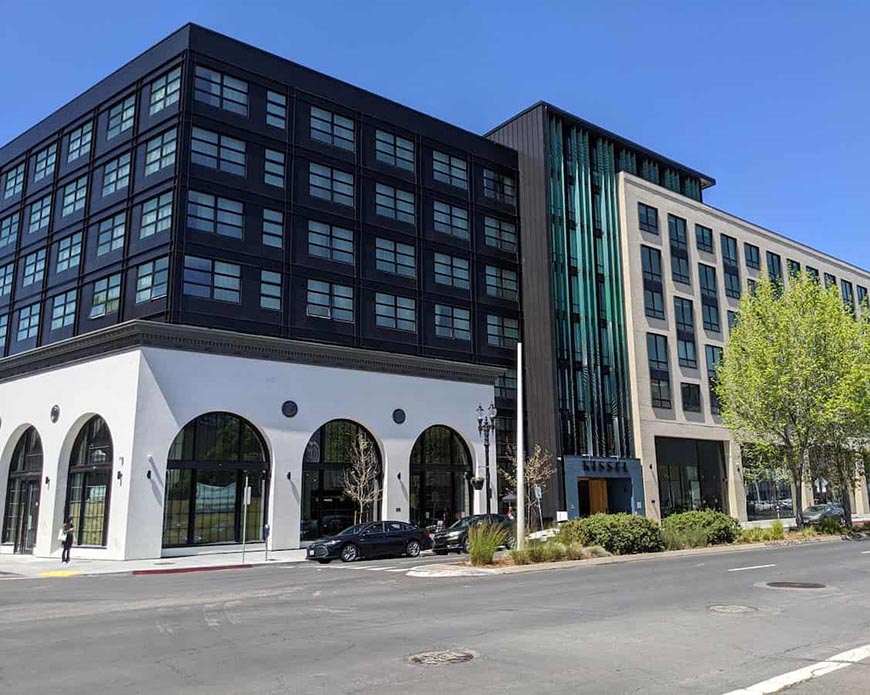
With a passion for aesthetics and an eye for unconventional beauty, I planned this visit around staying in one of Oakland’s most distinctive design-forward accommodations—Kissel Uptown Oakland, part of the Unbound Collection by Hyatt. Located in the heart of Uptown at 2455 Broadway, this hotel stood out not just for its architectural boldness but for how effortlessly it has become a canvas reflecting Oakland’s eclectic spirit.
2. Why Kissel? A Blend of History and Modern Design
The Kissel isn’t just a hotel—it’s a dialogue between the old and the new. The building pays homage to its past with brick exteriors and industrial accents, yet the interiors feel unapologetically modern. Vaulted ceilings, bold geometric patterns, custom lighting installations, and local artwork bring a vibrancy that speaks to Oakland’s deep cultural and artistic roots.
Booking the hotel was straightforward. I reserved a Premier King Room with Balcony via Hyatt’s official website, which offered a discounted rate for early booking. The three-night stay came to approximately $1,150 USD (including taxes and fees). That breaks down to roughly $383 per night, which for an art-focused, boutique-style property in a central location, felt justified given the attention to detail and immersive experience it promised.
3. Stepping Inside: First Impressions of the Lobby
Upon entering the lobby, the aroma of wood and a faint scent of citrus welcomed me. The reception desk was framed by a contemporary mural—a sprawling piece created by a local artist, fusing abstract geometry with urban symbolism. It instantly set the tone.
To the left, a series of sculptural seating elements caught the eye—modular velvet loungers in muted greens and burnt oranges, paired with brass coffee tables stacked with independent art publications. Floor-to-ceiling windows allowed natural light to drench the entire space, accentuating the organic materials: walnut, polished concrete, raw steel.
The check-in was quick but not rushed. The staff was dressed in minimalist, design-forward uniforms—no generic hotel attire here. Every detail appeared intentional. The concierge handed me a key card in a recycled-paper sleeve printed with a hand-drawn map of the neighborhood. No branding overload. No sterile corporate vibe. Just quiet confidence.
4. The Room: Where Texture Meets Tranquility
The elevator ride to the 6th floor revealed more artistic nuances—each floor’s corridor features different thematic art curated from local studios. On my level, it was abstract photography with a focus on light and shadow, printed on oversized canvases.
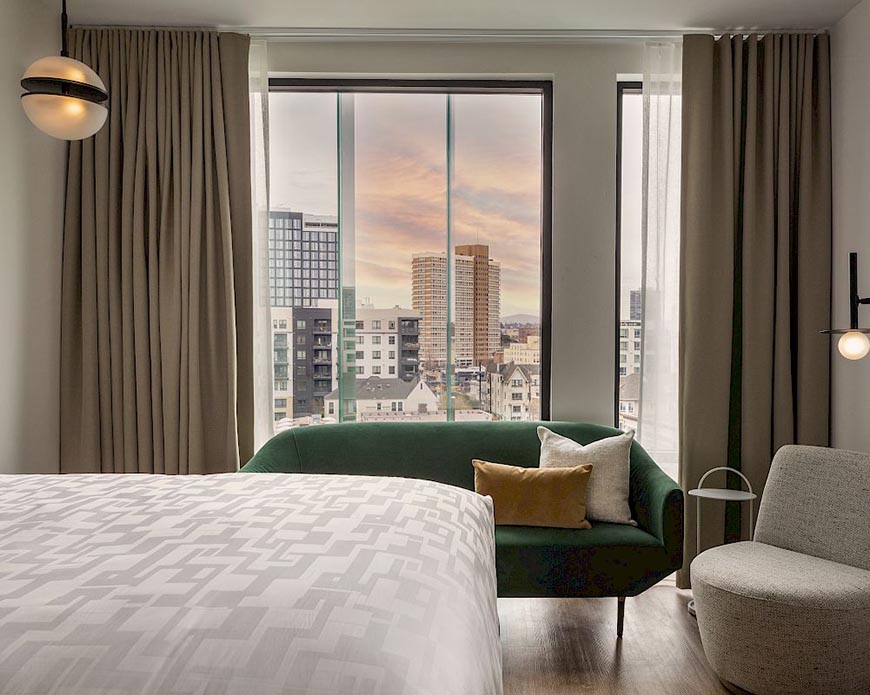
When I opened the door to my room, the first thing that struck me was the color palette. Muted greys with ochre and sapphire accents. Floor-to-ceiling blackout curtains on one side, and on the other—a glass sliding door that led to a private balcony overlooking Broadway Avenue. The view was a marriage of architectural eras: Deco-style facades, graffiti-tagged alleyways, and sleek new constructions all visible in one frame.
The king-sized bed stood atop a low-profile platform, flanked by floating walnut nightstands. Above the bed: a woven tapestry in earth tones, hand-stitched and framed like a museum piece. Lighting was soft and layered—recessed ceiling fixtures, under-bed lighting, dimmable sconces.
The minibar was thoughtfully stocked—not your standard plastic-wrapped fare, but local craft snacks, kombucha brewed in nearby Temescal, and ceramic espresso cups instead of disposable paper. The bathroom featured terrazzo floors, matte black fixtures, and a walk-in rain shower with stone tile. Even the toiletries were design-centric: refillable glass bottles with custom labels created in partnership with an Oakland perfumery.
5. Design with Depth: The Hotel as Gallery
Every public space within Kissel seems to breathe with intention. The rooftop bar, High 5ive, is both a social hub and an open-air gallery. A rotating collection of installations hangs from the overhang—during my stay, it featured upcycled materials shaped into marine life, created by an artist collective focusing on environmental issues. During golden hour, the entire rooftop glowed—lights embedded in the floor created constellations underfoot, while the skyline shimmered in the distance.
The lobby café, Otto’s, doubles as a micro-gallery. Its walls host exhibitions that rotate quarterly, often featuring themes tied to Oakland’s history or social activism. During my stay, the theme was “Built by Hands,” showcasing textile art from immigrant communities.
Kissel doesn’t shout about these features—they just exist, waiting to be noticed, much like Oakland itself.
6. Neighborhood Aesthetics: Walks Through Uptown
Location always matters, and Uptown Oakland has emerged as one of the city’s most design-conscious areas. The streets around Kissel are filled with mid-century signage, converted warehouses, and modernist infill developments. Just a block away, the historic Fox Theater’s neon marquee lights up at dusk, casting pink and blue hues onto the sidewalk.
A few minutes’ walk took me to 19th Street BART Station, framed by a mural of Angela Davis, rendered in abstract expressionist strokes. Independent design shops and furniture studios line the streets, including Mira Blackman, which offers handmade textiles, and Umami Mart, a Japanese lifestyle boutique that blends retail with experience.
I spent an afternoon browsing Esqueleto, a minimalistic jewelry store with pieces displayed like modern sculpture. Around the corner, Collector Art Shop curates small works from local illustrators, photographers, and ceramicists.
Each of these storefronts complements the aesthetic of Kissel, forming a continuous thread of creativity that defines the neighborhood.
7. Dining as Design: A Culinary Tapestry

Art doesn’t end at canvas or concrete—it extends to cuisine. Inside Kissel, Otto’s serves as the design lover’s brunch haven. I ordered a buckwheat waffle layered with house-made almond butter, banana compote, and edible flowers—a plate as thoughtfully arranged as any still life.
Just across the street, Calavera presented another artistic experience. The Mexican restaurant occupies a high-ceilinged warehouse space filled with suspended papier-mâché sculptures and oversized Day of the Dead masks. Each cocktail glass was uniquely hand-blown, each dish plated like a visual narrative.
Further down Broadway, Duende, a Spanish-inspired bistro, blends culinary innovation with architectural drama. Exposed rafters, arched wine racks, and an open kitchen stage the experience. The grilled octopus arrived on a black ceramic plate, paired with saffron aioli in a swirl that looked more like a brushstroke than a condiment.
8. Staying Inspired: In-Room Creativity and Workspaces
Even downtime in the hotel didn’t feel idle. Kissel’s rooms feature a modular workspace with a genuine oak desk, a leather writing mat, and an angle-adjustable task lamp that would make any designer nod in approval. The desk drawer contained sketch pads, a set of colored pencils, and a note encouraging guests to leave behind a drawing or thought—an analog guestbook of sorts.
A curated playlist played softly on a Bang & Olufsen Bluetooth speaker beside the bed—mostly local artists, layered with jazz, indie soul, and the occasional spoken word interlude. The room felt alive even when I wasn’t.
9. Sunset Rituals and Golden Light
Every evening, just before sunset, I returned to the balcony with a glass of wine from the mini bar. From that perch, I watched the city transform. Shadows lengthened, streetlamps flickered, and the air took on that unmistakable California crispness.
One night, a pop-up jazz performance took place right below on Broadway. A trio set up under the streetlamp, their sounds floating up to my sixth-floor view like a secret meant only for those who paid attention.
It reminded me why design matters—not just in the built environment but in experiences. In how spaces invite reflection, ignite curiosity, and reward the attentive.
10. Booking Details Recap
- Hotel: Kissel Uptown Oakland, part of the Unbound Collection by Hyatt
- Address: 2455 Broadway, Oakland, CA 94612
- Room Type: Premier King with Balcony
- Price: Approx. $1,150 USD for 3 nights (around $383 per night)
- Booking Platform: www.hyatt.com
11. Design That Lingers
Long after I left the room key at the front desk and stepped back onto Broadway with my luggage rolling behind me, the visual impressions of Kissel lingered. Oakland has a way of fusing grit and grace, and this hotel exemplifies that beautifully—not just as a place to sleep, but as a place to see, to feel, to think.
Each corner of the hotel whispered a story, every material invited touch, and all around, the city spoke through line, texture, and tone.