The early morning light shimmered over the rooftops of San Jose, catching the faint glint of dew on car windshields and the steel-and-glass silhouettes of downtown. The quiet pulse of the city was just beginning to stir. A thermos of dark roast sat beside the GPS, a pair of sunglasses resting on the dashboard. Everything was in order. The road ahead promised not only miles but stories—etched into coastal hillsides, whispering from oak groves and redwood stands, humming along bridges, and rising with the mist that veils the Bay.
With the ignition turned, the journey began—not a rushed escape but a deliberate unfolding. There’s something deeply grounded about a road trip, especially one through Northern California. It invites a contemplative pace, an almost ceremonial ritual of discovery, right from the moment rubber meets road.
1. Morning in the Valley: Departing San Jose
The hum of the freeway faded behind me as I turned onto quieter roads near the outskirts of San Jose. Despite being the heart of Silicon Valley, there’s a pastoral rhythm in some of its fringes. Suburban streets give way to open plots, where lemon trees grow with the nonchalance of old aristocrats and vineyards line the horizon like a patchwork of green silk.
San Jose doesn’t impose its presence; it murmurs it. The air carries the scent of jasmine from front yard hedges and distant eucalyptus from the foothills. I took McKean Road briefly, a lesser-known but scenic detour that winds past Calero Reservoir. It’s a smooth start, a soft breath before the crescendo of terrain that comes later.
The first act of any good road trip is not the view—it’s the release. The quiet acknowledgment that you’ve left behind structure, noise, inboxes. As the last traffic light blinked behind me, the silence in the car was not empty; it was filled with potential.
2. Highways with Personality: CA-85 to CA-280
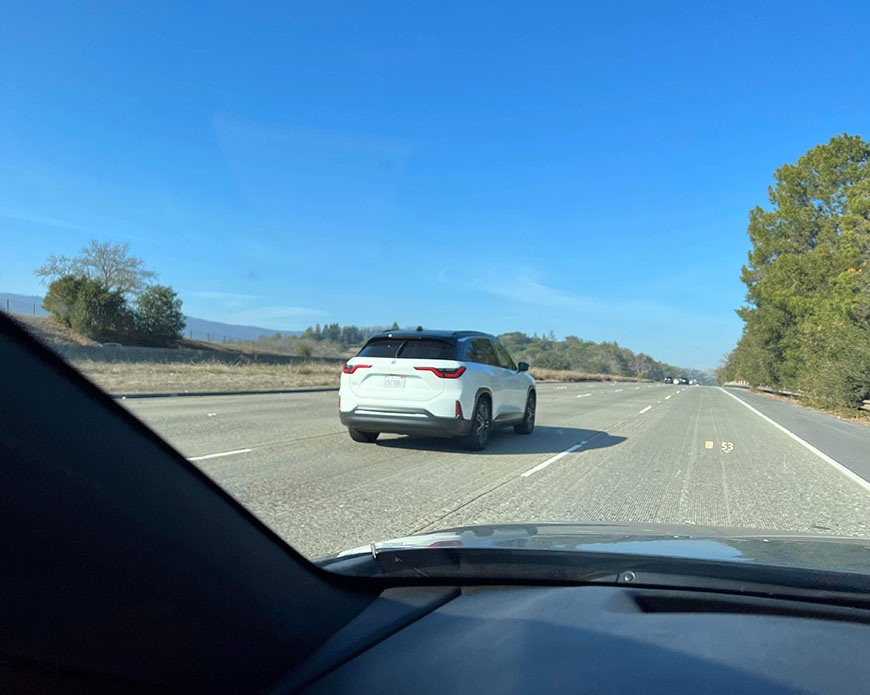
California’s highways are rarely just transit—they’re characters. Some are brash, like US-101 with its impatient pace and commercial sprawl. Others, like CA-280, have grace. I merged onto 280 near Cupertino, and it immediately felt like a different sort of drive. The lane markings seemed to breathe, the asphalt freshly combed. It’s often dubbed the most beautiful freeway in America—and it earns that reputation, mile after green mile.
To the west, the Santa Cruz Mountains rose like a quiet oath, jagged and loyal. Eastward, Silicon Valley lay beneath the morning haze, a realm of glass towers and intellectual voltage. But on 280, it all felt at a remove—like watching a play from the mezzanine.
Deer occasionally appear along this stretch, emerging from oak thickets as though checking on civilization. The rolling terrain, interspersed with ancient oak and sycamore, unfolds like a living gallery. Along the way, I passed by the Crystal Springs Reservoir. A roadside pullout here is worth a stop. Stepping out, the air had that mountain-lake quality—cool, metallic, refreshing. The reservoir sat like polished glass under the soft sky.
3. Pulgas Ridge and the Call of the Foothills
Near Redwood City, the exit toward Edgewood Road leads to one of the most overlooked delights along this route: Pulgas Ridge Open Space Preserve. It’s not a detour for the sake of nature photography—it’s a literal elevation of spirit. I parked briefly and walked one of the shorter trails, shaded by Pacific madrone and coast live oak. The trail crunched beneath my boots with the sound that always takes me back to childhood hikes.
The views from the ridges offered a rewarding glance over the Bay and back toward the spine of the mountains. There’s something humbling in standing between two vast geographies—one of water, one of rock—and knowing the road runs straight through them both.
4. Descending Toward the Water: From San Mateo to the Skyline
Returning to 280, I continued north until I reached Highway 92. It’s a brief, but essential shift westward that bisects the peninsula and leads to Skyline Boulevard—CA-35. The turn onto Skyline always demands a moment of reverence. The road narrows, curves tighten, and suddenly you are amidst towering groves of second-growth redwoods. Light filters down in speckled shafts, and the scent of damp earth rises.
Skyline runs along the ridge like a whispered secret. Few cars venture here during weekday mornings. Those that do tend to be driven by people with patience and purpose—motorcyclists, naturalists, writers in thought.
A short pull-off led to Windy Hill Open Space Preserve. Even in early summer, the winds lived up to the name. Standing there, looking down toward Half Moon Bay, with wisps of fog drawing lines across the fields, I remembered why the coast draws artists. There’s drama in it, but also discipline. The Pacific doesn’t beg for attention—it commands it.
5. Downhill into the Fog: Pacific Edge and the Great Highway
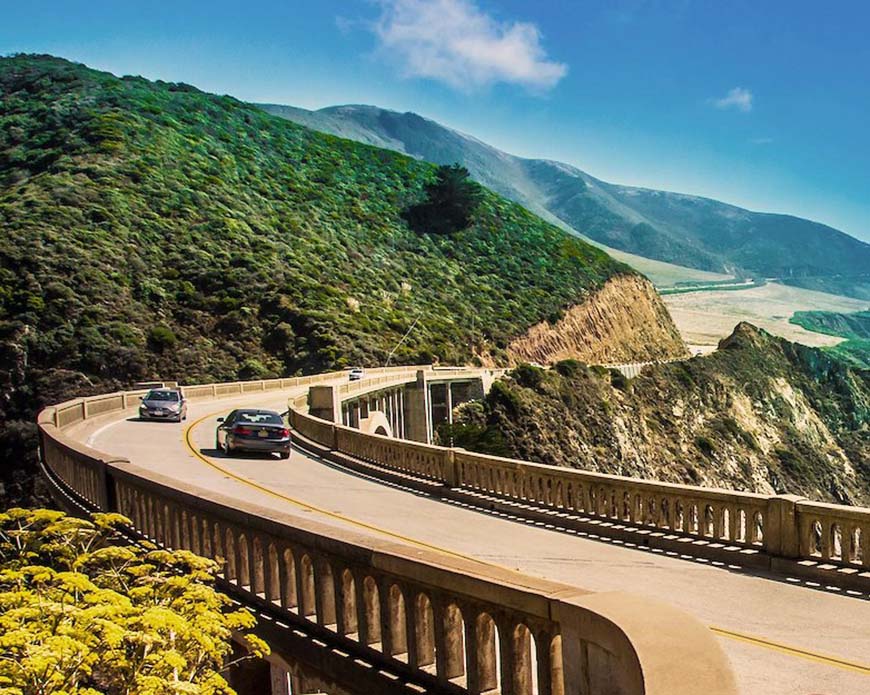
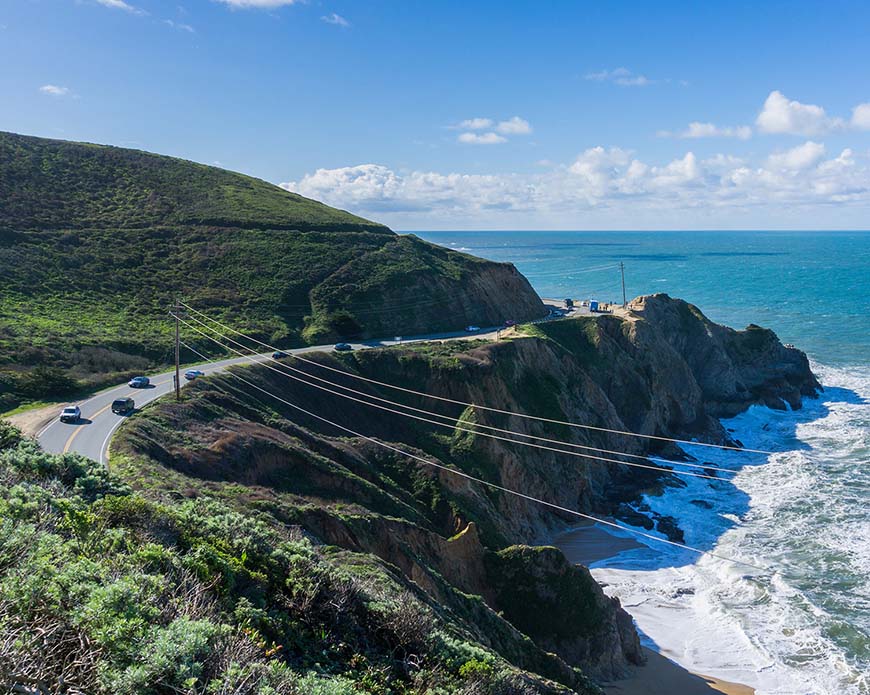
Taking Highway 1 north at the junction with CA-35, I drove toward Pacifica. It’s a transition from woodland to ocean, like changing keys in a symphony. The road clung to the cliffs, the left side dropping steeply into frothy surf below. The wind here could knock your cap off, but it carried stories—of sailors, seals, storms.
Linda Mar Beach appeared suddenly—a crescent of sand nestled below windswept dunes. Surfers bobbed in the gray-green water like punctuation marks in a sentence too long to read in one sitting. I parked briefly again. A coffee shack near the shore sold espresso strong enough to restart a stalled engine. Locals nodded in that quiet, reserved way that beach communities do—acknowledging your presence without fuss.
The Great Highway stretched north from here, hugging Ocean Beach into San Francisco proper. This stretch—especially at sunset—feels like arriving at the edge of something old and sacred. The city reveals itself slowly, with dunes giving way to pastel houses and the rhythmic pulse of urban life.
6. Approaching San Francisco: The Sutro Turn
Entering San Francisco by road is not like entering any other American city. It doesn’t sprawl toward you; it reveals itself in angles and fogbanks, steep hills and occasional glimpses of distant bridges. I veered right onto Sloat Boulevard and up toward the Inner Sunset. Sutro Tower loomed above like some strange guardian of the hills.
At Twin Peaks, the city unfolded before me in full. It’s a place worth pausing, even if only for a few minutes. From here, the skyline of downtown San Francisco doesn’t appear as an assault of architecture—it looks almost gentle. The Bay Bridge stretches in silver threads to the east, while the hills of Marin fold into themselves across the water.
The light was shifting—becoming golden. Below, streetcars clanged faintly on Market Street, and the wind carried faint music from someone’s rooftop speaker. The city didn’t wait for me; it never had to. But it welcomed me just the same.
7. Into the Heart: Divisadero, Fillmore, and the Marina Curve
The final stretch led down into the grid—those classic Victorian neighborhoods that mix art with memory. Along Divisadero, I passed cafés with handwritten menus, bookstores with paperbacks in sidewalk crates, corner groceries that haven’t updated their signage since the Reagan era. The streets weren’t quiet—they were textured. Lived-in.
North Beach and the Marina rose gently beyond the hill. Turning onto Lombard Street, the infamous curves waited, of course, but I bypassed them for now, choosing instead to drift toward the Marina Green. It’s a place that captures the spirit of arrival—not through spectacle, but by proximity to all that defines the city.
To the west, the Golden Gate. That elegant, rust-colored span standing not just as engineering, but as testament. To the east, Alcatraz, brooding and stark. Ahead, sailboats freckling the Bay. Children laughing in foreign languages. Dogs chasing kites.
8. The Road That Binds: Memory in the Rearview
The engine clicked as it cooled. I leaned against the hood, looking back—not just at the road I had traveled, but at what it represented. A route that connected more than two cities. It stitched together past and present, nature and neighborhood, silence and sound.
Traveling by car allowed the journey to unfurl at its own tempo. Unlike flying or taking a train, this drive from San Jose to San Francisco wasn’t merely about transport. It was about observing the changing vocabulary of the land. The shifting scent in the air. The echo of places that don’t beg for attention, but reward those who do pay attention.
The day lingered long into the evening. The city had its own rhythm now, pulsing with nightlife and neon, food trucks and foghorns. But that road—the one that curled through reservoir valleys, climbed redwood ridges, kissed the Pacific’s edge, and delivered me here—it lived on behind me, tire-marked and memorable.
And somewhere, far back on CA-280, a deer paused again at the roadside, listening for the echo of passing wheels.